

The buffalo are on the loose ...
Have you heard of the “champagne” of cheeses?
Let us introduce you to our organic buffalo cheese range.
Let us introduce you to our organic buffalo cheese range.

The ‘champagne’ of cheeses
is now available in organic shops.

Jeder Punkt ein Argument.
Einfach mit dem Finger nach links wischen!


sensationell – eine intensive
Geschmacksoffenbarung

durch artgerechte
Bio-Büffel-Haltung


als Landschaftspfleger
5 organic buffalo cheeses
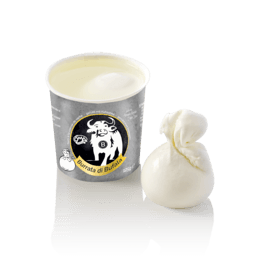
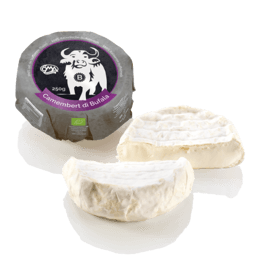
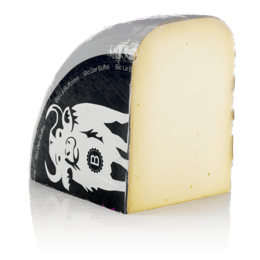
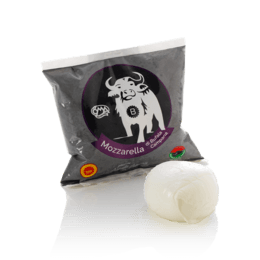
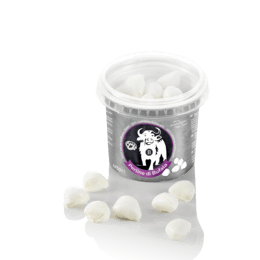


That’s why you’ll find organic buffalo cheese in organic shops.
- A revelation of flavour – it doesn’t get any creamier than this
- Try it once and you’ll be hooked for life.
- 100% organic buffalo milk from animals reared in accordance with their species’ needs
- Traditional artisanal production
- Buffalo are regarded as guardians of the countryside.

Scenes from the buffalo pasture


Water buffalo are natural conservationists and landscape managers: they maintain areas that are too wet or damp for cattle or horses—and that cannot be worked by machinery—through grazing. Their biological characteristics make them ideally suited to this task; in the process, they eat and utilise grasses that a cow would leave standing. Through their grazing,
they keep the dense vegetation that tends to grow in these areas open and create new habitats for certain pioneer species.
They also contribute to bird conservation. This creates and preserves new habitats and breeding sites for various species of meadow-nesting birds,
while the dung attracts insects that in turn provide food for the birds.
By the way, water buffalo love wallowing in water and mud. They often dig or enlarge a shallow pool at the lowest point of the pasture—and then the real fun begins.
Questions & Answers
Why is buffalo milk and cheese lighter in colour than those made from cow’s milk?
Buffalo milk contains no carotene. Carotene is a provitamin, the yellow precursor of vitamin A. Buffalo milk contains only pure vitamin A and, where present, traces of carotene. However, as buffalo can convert almost all of this into vitamin A, buffalo milk is whiter than cow’s milk.
How much milk does a buffalo cow produce?
An organic water buffalo produces only about 8 to 10 litres of milk per day. For comparison, organic cows yield an average of 20 litres, while high-yield cows in conventional systems can exceed 30 litres. This low output makes water buffalo milk—and the cheese crafted from it—a rare and prized commodity.
Which ingredients in buffalo milk are worth mentioning?
Buffalo milk contains almost twice as much valuable calcium and zinc, as well as three times as much iron, as cow’s milk.
Why is buffalo cheese more expensive?
Rearing the animals is significantly more costly, particularly in terms of the daily milk yield (see previous question) and the revenue generated from it. Milking is also more labour-intensive than with domestic cattle. Economic viability is therefore only possible with a larger herd size.
How much milk is needed to make buffalo cheese?
Approximately 6 litres of organic buffalo milk are used to produce one kilogram of organic buffalo soft cheese.
What is the shelf life of buffalo products?
The shelf life of buffalo cheese is generally similar to that of cow’s milk cheese.
However, Mozzarella bearing the DOP seal usually has a shorter shelf life than conventional Mozzarella. This is due to the specifications set by the DOP Consortium, which govern the production of this product. Lactic acid bacteria must be used in the production process. These are active, living organisms that cause the milk to curdle. In contrast, mozzarella produced without DOP restrictions may use citric or lactic acid, which alters the process only once. Because the bacteria continue to work, the cheese keeps ripening and has a shorter shelf life.
However, Mozzarella bearing the DOP seal usually has a shorter shelf life than conventional Mozzarella. This is due to the specifications set by the DOP Consortium, which govern the production of this product. Lactic acid bacteria must be used in the production process. These are active, living organisms that cause the milk to curdle. In contrast, mozzarella produced without DOP restrictions may use citric or lactic acid, which alters the process only once. Because the bacteria continue to work, the cheese keeps ripening and has a shorter shelf life.
How long do buffalo live?
When raised in species-appropriate, natural conditions, buffalo cows can live to be between 20 and 25 years old.
What happens to the buffalo calves?
The bull calves from our Dutch supplier are reared on the farm.
Our Italian partner raises some of his bull calves on-site to later use them as breeding bulls for the natural mating of organic buffalo cows.
Bull calves not selected for breeding are sold to a slaughterhouse for meat production once they reach 10 months of age. Buffalo meat is now enjoying growing demand and is described as having a more aromatic flavour than that of other cattle breeds.
Animal welfare in dairy production—beyond legal requirements—remains a key focus for us. We can therefore assure you that none of the unacceptable practices highlighted in media reports are used in our production processes. Allgäu Organic Dairies and our partner creameries strictly ensure compliance with EU legal requirements and the guidelines of organic farming associations, naturally including species-appropriate care for the buffaloes.
Where can buffalo be kept?
They are suitable for extensive grazing on wetland, moorland, natural and fallow land for landscape conservation. Grazing in extensive marginal areas where conventional cattle farming is not possible. Provided certain specific conditions are met, however, water buffalo can be reared in a similar way to cattle (pasture-based/stable-based rearing).
For further information, please contact us at info@oema.de.

Bei Fragen? Einfach fragen!
Please feel free to contact us with any questions you may have. After all, that’s what we’re here for.

Personal advice:
+49 (0)8381-8890-100Mon–Fri 8:00 am–4:00 pm
Request a callback
+49 (0)8381-8890-100Mon–Fri 8:00 am–4:00 pm
Request a callback